
Mortgage vocabulary, translated. Each entry gives the plain-English definition, why the term actually matters to your decision, and a real example — with a link to the page that goes deeper. Written and maintained by the team at Valley West Mortgage, a Las Vegas lender since 2004.
Amortization is the schedule that splits each mortgage payment between interest and principal so the loan reaches zero at the end of its term. Early payments are mostly interest; later payments are mostly principal.
Why it matters: It explains why equity builds slowly at first and why extra principal payments early in the loan save the most interest.
Example: On a new 30-year loan, a large share of month one's payment is interest; by year 20 the same payment is mostly principal. payment calculator →
APR expresses the total yearly cost of a mortgage - the interest rate plus most lender fees and certain closing costs - as a single percentage. It is designed for comparing offers, not for calculating your payment.
Why it matters: Two loans with the same rate can have different APRs; the higher-APR offer is charging more in fees.
Example: A loan at 6.5% with heavy fees can carry a higher APR than a 6.625% loan with light fees - the second may be the better deal. how rates are quoted →
An appraisal is a licensed appraiser's independent opinion of a home's market value, ordered by the lender to confirm the property supports the loan amount.
Why it matters: If the appraisal comes in below the purchase price, the loan is based on the lower number - the buyer renegotiates, brings more cash, or walks.
Example: A home under contract at $450,000 that appraises at $440,000 leaves a $10,000 gap the parties must resolve. FHA appraisal standards →
A basis point is one one-hundredth of a percentage point. Rate moves are quoted in basis points: 25 basis points equals 0.25%.
Why it matters: It removes ambiguity - 'rates rose a quarter point' means 25 basis points, not 25%.
Example: A move from 6.50% to 6.75% is 25 basis points. current rate context →
Cash to close is the total money a buyer must bring to settlement: down payment plus closing costs and prepaid items, minus credits like earnest money already paid and any seller contribution.
Why it matters: It is the real affordability number - buyers budget for the down payment and get surprised by the rest.
Example: A 3.5% down payment on a $400,000 home is $14,000, but cash to close will be meaningfully higher once costs and prepaids are added. how seller credits reduce it →
The COE is the VA document proving a veteran, service member, or eligible surviving spouse qualifies for the VA home loan benefit. Lenders can usually pull it electronically in minutes.
Why it matters: It is the gateway document for VA financing - but not a loan approval by itself.
Example: A veteran with 90 days of wartime active service typically qualifies; the COE documents it for the lender. VA eligibility →
Closing costs are the fees paid to complete a mortgage: lender charges, title and escrow fees, the appraisal, recording fees, and prepaid items like insurance and property taxes.
Why it matters: They come on top of the down payment and vary by lender and transaction - the Loan Estimate itemizes them so offers can be compared.
Example: Two lenders quoting the same rate can differ by thousands in closing costs. who can pay them for you →
A conforming loan meets the purchase rules of Fannie Mae and Freddie Mac, including the loan-size limit set each year by the Federal Housing Finance Agency. For 2026 the single-family limit in most areas, including Clark County, is $832,750.
Why it matters: Staying at or below the limit keeps a loan in the conventional mainstream; above it, jumbo rules apply - typically stricter credit, reserves, and documentation.
Example: A buyer borrowing $850,000 in Las Vegas is in jumbo territory; at $830,000 they are conforming. conventional loans explained →
DTI is your total monthly debt payments - including the new mortgage - divided by gross monthly income. Lenders use it to judge whether the payment fits your finances.
Why it matters: It is one of the main approval levers: lowering debts or raising qualifying income moves it directly.
Example: Income of $8,000 a month with $3,200 in total debts is a 40% DTI. full DTI guide →
Discount points are prepaid interest: one point costs 1% of the loan amount and permanently lowers the interest rate by an amount the lender sets.
Why it matters: Points trade cash today for a lower payment for as long as you keep the loan - worth it only past the break-even month.
Example: Paying $4,000 on a $400,000 loan to cut the payment $50 a month breaks even in 80 months. compare with a temporary buydown →
DSCR is an investment-property measure: the property's rent divided by its full housing payment. A DSCR of 1.0 means rent exactly covers the payment; DSCR loans qualify the property on this ratio instead of the borrower's tax returns.
Why it matters: It lets self-employed and portfolio investors qualify on cash flow - the property carries the application.
Example: A home renting for $2,400 with a $2,000 all-in payment has a 1.20 DSCR. DSCR loans explained →
Earnest money is the deposit a buyer puts down with an offer to show good faith. It is held in escrow and credited toward cash to close if the sale completes.
Why it matters: Under contract contingencies, it is refundable; blow past your contingency deadlines and it can be forfeited.
Example: A $5,000 earnest deposit on an accepted offer reduces the cash needed at closing by $5,000. ask about offer strategy →
Escrow has two meanings: the neutral third party that holds funds and documents during the purchase, and the account your servicer keeps afterward to pay property taxes and homeowners insurance from your monthly payment.
Why it matters: The escrow account is why payments change even on a fixed-rate loan - taxes and insurance get re-analyzed every year.
Example: If your insurance premium rises, next year's escrow analysis raises the monthly payment to cover it. escrow accounts in depth →
The VA funding fee is a one-time charge on most VA loans, usually financed into the balance, that keeps the program running. Veterans receiving VA disability compensation are generally exempt.
Why it matters: It is the trade-off for zero down payment and no monthly mortgage insurance - and the exemption makes VA even stronger for disabled veterans.
Example: An exempt veteran borrowing $400,000 skips a fee that would otherwise add thousands to the balance. VA loans explained →
Gift funds are money from an acceptable donor - typically family - used toward down payment or closing costs, documented with a gift letter stating no repayment is expected.
Why it matters: Programs differ on who can give and how much of the down payment can be gifted; documentation is what makes a gift usable.
Example: A parent wiring $20,000 with a signed gift letter can fund most of an FHA down payment. FHA gift rules →
A jumbo loan exceeds the conforming loan limit, so it cannot be sold to Fannie Mae or Freddie Mac and follows the lender's own guidelines - typically stricter on credit, reserves, and documentation.
Why it matters: Crossing the limit changes the rulebook, not just the size; some buyers structure a larger down payment specifically to stay conforming.
Example: In 2026, a Las Vegas loan above $832,750 for a single-family home is jumbo. where the line sits →
The Loan Estimate is the standardized three-page disclosure a lender must send within three business days of your application, showing the rate, payment, closing costs, and cash to close in a fixed format.
Why it matters: Because every lender uses the identical form, it is the honest way to compare offers line by line. It replaced the Good Faith Estimate in 2015.
Example: Put two Loan Estimates side by side and compare page 2's origination charges - that is where offers differ most. what replaced the GFE →
LTV is the loan amount divided by the home's value (the lower of price or appraisal). A $360,000 loan on a $400,000 home is 90% LTV.
Why it matters: LTV drives mortgage insurance, pricing, and program eligibility - more down payment means lower LTV and usually better terms.
Example: Reaching 80% LTV is what lets conventional borrowers remove PMI. removing PMI →
Mortgage insurance protects the lender if a loan defaults. Conventional loans under 20% down carry private mortgage insurance (PMI), which can be removed as equity grows; FHA loans carry MIP, which on most low-down-payment FHA loans lasts for the life of the loan.
Why it matters: The removability difference is a core FHA-versus-conventional decision factor.
Example: A conventional borrower can request PMI removal at 80% LTV; an FHA borrower typically refinances to shed MIP. current MIP structure →
An origination fee is what a lender charges to process, underwrite, and fund your loan, listed in section A of the Loan Estimate.
Why it matters: It is a direct lever when comparing lenders - some charge flat fees, some percentage-based, some none.
Example: Section A charges that differ by $2,000 between two same-rate offers are $2,000 of real savings. get a comparison →
PITI is the full monthly housing payment: principal, interest, taxes, and insurance - plus HOA dues and mortgage insurance where they apply.
Why it matters: Lenders qualify you on the complete PITI, not just principal and interest - and so should your budget.
Example: A $2,400 P&I payment can be a $3,100 PITI once taxes, insurance, and HOA are added. affordability math →
A preapproval is a lender's written statement - based on verified credit, income, and asset documents - that you qualify for a specific loan amount. It is stronger than a prequalification, which relies on unverified information.
Why it matters: Las Vegas listing agents routinely require a preapproval letter with offers; a prequalification rarely carries the same weight.
Example: Two identical offers land; the one with a documents-verified preapproval letter usually wins the counter. preapproval vs prequalification →
Principal and interest is the core loan payment: principal reduces the balance, interest pays the lender for the borrowed money. It excludes taxes, insurance, and HOA.
Why it matters: Most online calculators quote P&I only - budgeting on that number understates the true payment.
Example: A quoted $2,400 payment is P&I; the escrowed tax and insurance portion comes on top. run your P&I →
A rate lock is the lender's commitment to hold your quoted interest rate for a set window - commonly 30 to 60 days - while the loan closes.
Why it matters: Between application and closing, market rates move; the lock is what makes your quote real. Let it expire and you may pay extension fees or the current rate.
Example: A 45-day lock on a purchase closing in 40 days protects the quote; a construction delay past day 45 can cost an extension fee. when to lock, and how float-downs work → rate context →
Reserves are the liquid funds left after closing, measured in months of PITI. Some programs and price points require a specific number of months in the bank.
Why it matters: Reserves separate approvals at higher loan amounts and on investment property - it is not just about the down payment.
Example: A lender requiring six months of reserves on a $3,000 PITI wants $18,000 still in accounts after closing. where requirements rise →
Residual income is the VA's second affordability test: the money left over each month after the mortgage payment, taxes, debts, and estimated living expenses, measured against a regional table by family size.
Why it matters: It is why VA approvals can differ from a pure DTI decision - and a key reason VA loans perform well.
Example: A family of four in the West must clear the VA's residual threshold even if their DTI already looks acceptable. VA qualification →
Seller concessions are closing costs the seller agrees to pay on the buyer's behalf, capped by loan program - conventional caps vary with down payment, FHA allows up to 6%, and VA caps true concessions at 4%.
Why it matters: Concessions can fund closing costs or a rate buydown without raising the buyer's cash to close.
Example: On a slow listing, $10,000 in concessions often helps a financed buyer more than a $10,000 price cut. the full program-by-program caps →
A temporary buydown prepays interest to lower the rate for the first years of the loan - 3 points lower in year one for a 3-2-1, settling at the note rate afterward. The cost sits in escrow, usually funded by a seller or builder credit.
Why it matters: You qualify at the full note rate; the buydown is payment relief, not approval help.
Example: On a $400,000 loan at an illustrative 7% note rate, a 3-2-1 buydown costs about $18,342 and saves $752 a month in year one. run the numbers →
Title insurance protects against ownership defects - liens, errors, fraud in the property's history. The lender's policy is required; the owner's policy protects your equity and is usually bought once at closing.
Why it matters: It is a one-time premium, not a recurring cost, and in Nevada the split of who pays is negotiable custom.
Example: A contractor lien recorded before purchase that surfaces later is the owner's policy's problem, not yours. closing questions →
Underwriting is the lender's verification stage: a underwriter reviews credit, income, assets, and the appraisal against program rules and issues an approval, an approval with conditions, or a denial.
Why it matters: Most approvals arrive as conditional - the conditions list is normal, not bad news.
Example: An underwriter may approve a file on condition of a written explanation for a large deposit. what underwriters actually check →
UFMIP is FHA's one-time mortgage insurance charge, currently 1.75% of the loan amount, almost always financed into the balance rather than paid in cash.
Why it matters: It is part of FHA's true cost alongside the monthly MIP - and part of what a later refinance out of FHA eliminates.
Example: On a $400,000 FHA loan, UFMIP adds $7,000 to the financed balance. FHA MIP in full →
A warrantable condo belongs to a project that passes conventional lending review - healthy budget, adequate insurance, enough owner-occupants, limited commercial space, no disqualifying litigation.
Why it matters: The project's status, not the buyer's finances, decides the financing: non-warrantable units need specialty loans with larger down payments.
Example: Two identical Las Vegas condos can finance completely differently because one building fails review. high-rise financing realities →
Term you did not find? Ask a licensed loan officer →
Valley West Mortgage · NMLS #65506 · Equal Housing Lender · 8010 W Sahara Ave, Suite 140, Las Vegas, NV · (702) 696-9900. Definitions are general education, not legal or financial advice and not a commitment to lend; program rules change and vary by scenario.
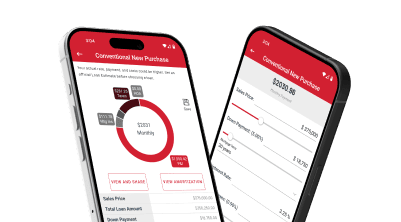
Install the Valley West Mortagage Mobile App for free today
and begin your path to owning a home.



Copyright 2026 Valley West Corporation DBA Valley West Mortgage. All Rights Reserved. NMLS #65506 | #VEGASSTRONG. This site is protected by Google reCaptcha and the Google Privacy Policy and Terms of Service apply.
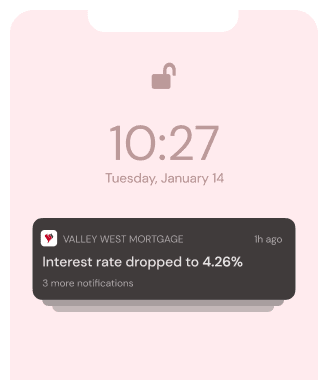
Instant notifications for your scenario
Let's do it⏰ Your offer will be delivered to your inbox in less than a minute!