Quick answer: Yes. VA requires a wood-destroying-insect (termite) report on an existing home when the property sits in a designated infestation area — that is 29 states plus Washington, D.C. statewide, and named counties in eight more states, including Clark County, Nevada. Everywhere else, VA orders the report only if the appraiser sees evidence of insects.
The inspection itself typically runs $100 to $200, and since June 15, 2022 (VA Circular 26-22-11) the veteran buyer is allowed to pay that fee where the Notice of Value requires the report. A wood-destroying-insect report generally stays valid about 90 days, so ordering early in escrow keeps it from expiring before closing.
The termite report is one of the small VA-specific steps that can stall a closing if nobody owns it early. Here's where inspections are mandatory, what changed in 2022, who pays, and what happens when the inspector finds something.
Key takeaways
- The VA mandates termite inspections in "moderate to heavy" and "very heavy" infestation zones — 30+ states including Nevada.
- Termites damage roughly 600,000 U.S. homes a year, around $5 billion in damage — the VA's safe-sound-sanitary standard is why the report exists.
- Since June 2022, veteran buyers may pay for the inspection themselves; before that, purchase-loan buyers were prohibited from paying it.
- Typical cost: $100–$200; reports are generally good for 90 days; active infestation must be treated before closing.
Why does the VA require a termite or pest inspection?
VA loans carry a "safe, sound, and sanitary" property standard — and termites are one of the few hazards that can quietly total a house. Termites damage about 600,000 U.S. homes every year, costing homeowners roughly $5 billion annually.
Because the VA guarantees the loan, it requires a clear wood-destroying-insect report in the parts of the country where infestation risk is real, so veterans don't inherit a structural problem with their benefit.
Which states require a VA termite inspection?
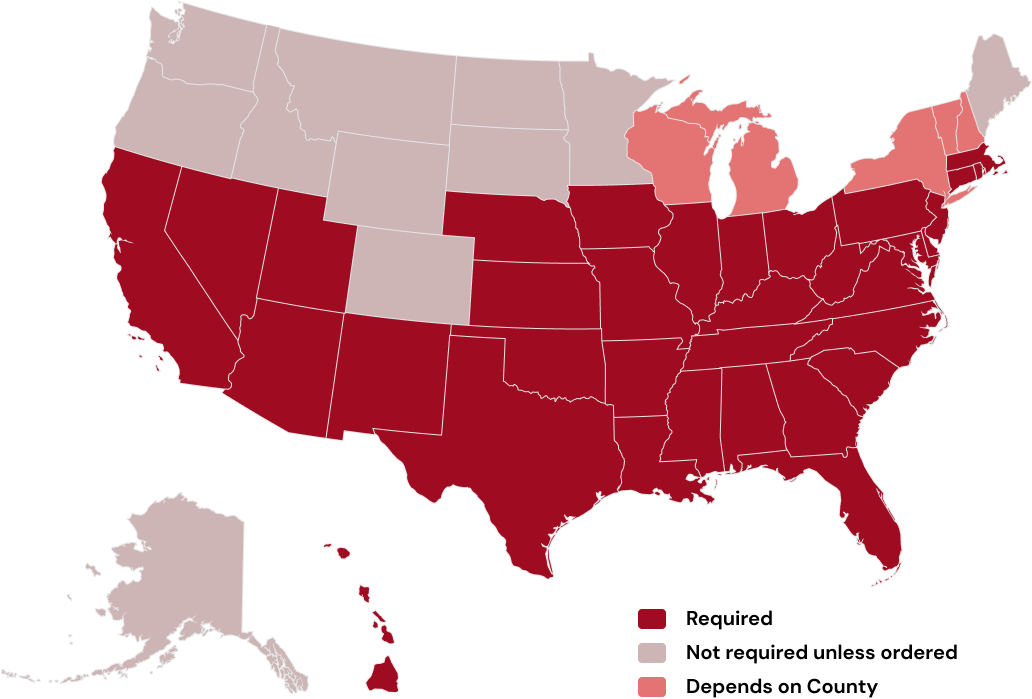
A VA termite inspection is required anywhere VA’s Termite Infestation Probability Map shows a “moderate to heavy” or “very heavy” probability of infestation. VA publishes that as a plain list of locations, so the answer is a lookup rather than a judgment call. The requirement applies statewide in 29 states and Washington, D.C., and it applies county by county in eight more.
"VA requires, as a Minimum Property Requirement, a wood destroying pest inspection report for certain properties located in an area on the Termite Infestation Probability Map where the probability of termite infestation is ‘very heavy’ or ‘moderate to heavy.’"VA Circular 26-22-11, “Pest Inspection Fees and Repair Costs,” June 15, 2022 — benefits.va.gov
“VA pest inspection,” “VA termite inspection” and “wood-destroying insect report” all name the same requirement. VA’s paperwork and your Notice of Value use the formal wording; buyers, agents and the pest-control operator who performs the work usually just say pest inspection or termite inspection.
If you searched for one phrase and landed on the other, you are in the right place — the table below uses VA’s wording, and that report is what your lender needs before closing.
| State | Inspection required for a VA purchase? | Notes and conditions |
|---|---|---|
| Alabama | Yes — statewide | VA requires wood-destroying-insect information for the whole state. |
| Alaska | Only if the appraiser sees evidence | Not on VA’s required list. A report is ordered only if the VA appraiser notes evidence of wood-destroying insects. |
| Arizona | Yes — statewide | VA requires wood-destroying-insect information for the whole state. |
| Arkansas | Yes — statewide | VA requires wood-destroying-insect information for the whole state. |
| California | Yes — statewide | VA requires wood-destroying-insect information for the whole state. |
| Colorado | Yes — in listed counties | 43 counties, including Douglas, El Paso, Pueblo, La Plata and Summit. |
| Connecticut | Yes — statewide | VA requires wood-destroying-insect information for the whole state. |
| Delaware | Yes — statewide | VA requires wood-destroying-insect information for the whole state. |
| District of Columbia | Yes — statewide | VA requires wood-destroying-insect information for the whole state. |
| Florida | Yes — statewide | VA requires wood-destroying-insect information for the whole state. |
| Georgia | Yes — statewide | VA requires wood-destroying-insect information for the whole state. |
| Hawaii | Yes — statewide | VA requires wood-destroying-insect information for the whole state. |
| Idaho | Only if the appraiser sees evidence | Not on VA’s required list. A report is ordered only if the VA appraiser notes evidence of wood-destroying insects. |
| Illinois | Yes — statewide | VA requires wood-destroying-insect information for the whole state. |
| Indiana | Yes — statewide | VA requires wood-destroying-insect information for the whole state. |
| Iowa | Yes — in listed counties | 79 counties, including Polk, Linn, Scott, Johnson and Dubuque. |
| Kansas | Yes — statewide | VA requires wood-destroying-insect information for the whole state. |
| Kentucky | Yes — statewide | VA requires wood-destroying-insect information for the whole state. |
| Louisiana | Yes — statewide | VA requires wood-destroying-insect information for the whole state. |
| Maine | Only if the appraiser sees evidence | Not on VA’s required list. A report is ordered only if the VA appraiser notes evidence of wood-destroying insects. |
| Maryland | Yes — statewide | VA requires wood-destroying-insect information for the whole state. |
| Massachusetts | Yes — statewide | VA requires wood-destroying-insect information for the whole state. |
| Michigan | Only if the appraiser sees evidence | Not on VA’s current required list, though older county lists still circulate. A report is ordered only if the VA appraiser notes evidence of wood-destroying insects. |
| Minnesota | Only if the appraiser sees evidence | Not on VA’s required list. A report is ordered only if the VA appraiser notes evidence of wood-destroying insects. |
| Mississippi | Yes — statewide | VA requires wood-destroying-insect information for the whole state. |
| Missouri | Yes — statewide | VA requires wood-destroying-insect information for the whole state. |
| Montana | Only if the appraiser sees evidence | Not on VA’s required list. A report is ordered only if the VA appraiser notes evidence of wood-destroying insects. |
| Nebraska | Yes — in listed counties | 57 counties, including Douglas, Lancaster, Sarpy, Hall and Buffalo. |
| Nevada | Yes — in listed counties | 13 counties: Carson City, Churchill, Clark, Douglas, Esmeralda, Lincoln, Lyon, Mineral, Nye, Pershing, Storey, Washoe and White Pine. Clark County covers Las Vegas and Henderson. |
| New Hampshire | Only if the appraiser sees evidence | Not on VA’s current required list, though older county lists still circulate. A report is ordered only if the VA appraiser notes evidence of wood-destroying insects. |
| New Jersey | Yes — statewide | VA requires wood-destroying-insect information for the whole state. |
| New Mexico | Yes — statewide | VA requires wood-destroying-insect information for the whole state. |
| New York | Yes — in listed counties | 18 counties: Bronx, Broome, Columbia, Delaware, Dutchess, Greene, Kings, Nassau, New York, Orange, Putnam, Queens, Richmond, Rockland, Suffolk, Sullivan, Ulster and Westchester. |
| North Carolina | Yes — statewide | VA requires wood-destroying-insect information for the whole state. |
| North Dakota | Only if the appraiser sees evidence | Not on VA’s required list. A report is ordered only if the VA appraiser notes evidence of wood-destroying insects. |
| Ohio | Yes — statewide | VA requires wood-destroying-insect information for the whole state. |
| Oklahoma | Yes — statewide | VA requires wood-destroying-insect information for the whole state. |
| Oregon | Only if the appraiser sees evidence | Not on VA’s required list. A report is ordered only if the VA appraiser notes evidence of wood-destroying insects. |
| Pennsylvania | Yes — in listed counties | 64 counties, including Philadelphia, Allegheny, Bucks, Lancaster and York. |
| Rhode Island | Yes — statewide | VA requires wood-destroying-insect information for the whole state. |
| South Carolina | Yes — statewide | VA requires wood-destroying-insect information for the whole state. |
| South Dakota | Only if the appraiser sees evidence | Not on VA’s required list. A report is ordered only if the VA appraiser notes evidence of wood-destroying insects. |
| Tennessee | Yes — statewide | VA requires wood-destroying-insect information for the whole state. |
| Texas | Yes — statewide | VA requires wood-destroying-insect information for the whole state. |
| Utah | Yes — in listed counties | 6 counties: Beaver, Garfield, Iron, Kane, San Juan and Washington. |
| Vermont | Only if the appraiser sees evidence | Not on VA’s required list. A report is ordered only if the VA appraiser notes evidence of wood-destroying insects. |
| Virginia | Yes — statewide | VA requires wood-destroying-insect information for the whole state. |
| Washington | Only if the appraiser sees evidence | Not on VA’s required list. A report is ordered only if the VA appraiser notes evidence of wood-destroying insects. |
| West Virginia | Yes — statewide | VA requires wood-destroying-insect information for the whole state. |
| Wisconsin | Yes — in listed counties | 20 counties: Columbia, Crawford, Dane, Dodge, Grant, Green, Iowa, Jefferson, Kenosha, Lafayette, Milwaukee, Ozaukee, Racine, Richland, Rock, Sauk, Vernon, Walworth, Washington and Waukesha. |
| Wyoming | Only if the appraiser sees evidence | Not on VA’s required list. A report is ordered only if the VA appraiser notes evidence of wood-destroying insects. |
VA also requires the report throughout Puerto Rico, the U.S. Virgin Islands, Guam, American Samoa and the Commonwealth of the Northern Mariana Islands. County lists change, so treat the table as a starting point: your lender confirms the requirement for the exact property address before the appraisal is ordered.
Source: VA Home Loans — Construction and Valuation: Local Requirements (Wood-Destroying Insect Information), checked July 24, 2026, plus VA Circular 26-22-11 (June 15, 2022). VA states that if a location is not listed, an inspection is not required unless issues are noted in the appraisal report.
In the remaining lighter-risk states, an inspection is required only if the VA appraiser notes evidence of wood-destroying insects at the property. Some counties within borderline states also carry their own requirements — your loan officer confirms the rule for the specific address.
Valley West takeIn Las Vegas the termite report is routine — desert subterranean termites are real here, and every VA purchase we close includes one. The mistake we see is ordering it late: the report is only good for ~90 days, but a slow escrow that orders it in week five ends up scrambling before closing. Order it right after the inspection contingency opens and it's a non-event.
How do you read the VA termite map?
The “VA termite map” is the Termite Infestation Probability (TIP) map, and VA requires the pest inspection in its two highest zones: “very heavy” and “moderate to heavy.” The map grades the country into four zones by how likely termite infestation is.
The two lower zones — “slight to moderate” and “none to slight” — do not trigger the requirement on their own; there, a report is ordered only if the VA appraiser notes evidence of wood-destroying insects, fungus growth, or dry rot.
- Very heavy or moderate to heavy: the wood-destroying-insect report is required on a VA purchase. These zones are the 29 statewide states, Washington, D.C., and the listed counties in the table above.
- Slight to moderate or none to slight: no automatic requirement — the appraiser’s observations control.
You do not need to squint at the map itself. VA publishes the requirement as a plain state-and-county list, which is what the table above reproduces — if your county is on it, plan on the inspection.
Who pays for the VA pest inspection?
VA has allowed the veteran buyer to pay for the termite inspection on a purchase loan in every state since June 15, 2022. Before that, VA permitted the veteran to be charged only as a local variance in a limited number of states and territories, which forced awkward negotiations everywhere else. Today it’s simply a negotiable item like other inspections:
"Effective immediately, VA is authorizing in advance, as a local variance, that Veterans may be charged wood destroying pest inspection fees, where required by the NOV. Veterans may also pay for any repairs required to ensure compliance with MPRs."VA Circular 26-22-11, June 15, 2022 — benefits.va.gov
- Typical cost: $100–$200 depending on the company and property size.
- Sellers still frequently cover it as part of the deal — ask your agent to write it into the contract explicitly.
- If treatment is needed, that cost is negotiable too, and must be completed with documentation before closing.
What happens if the inspector finds termites?
A VA termite finding does not kill the deal; leaving it untreated does. Active infestation must be professionally treated and significant structural damage repaired before the loan closes, with clear documentation on the report. In practice, treatment in the Las Vegas valley is fast and the seller usually handles it. Your loan officer coordinates the paperwork so the underwriter (loan reviewer) sees a clean final report.
Using your VA benefit in Las Vegas?
We close VA loans every month — inspections, funding fee, appraisal quirks and all. See our full VA funding fee guide, then get your numbers.
Get your fast quoteHow much does a VA termite inspection cost?
A VA wood-destroying-pest inspection typically costs $100 to $200. The pest-control operator sets that fee, not VA, so it moves with the company and the size of the property. VA has allowed the veteran buyer to pay it since June 15, 2022 where the Notice of Value requires the report, and sellers still frequently cover it as part of the deal. Reports are generally good for 90 days, so ordering early in escrow keeps one from expiring before closing.
What form does the VA termite inspection use?
In most states the inspector files form NPMA-33, the “Wood Destroying Insect Inspection Report.” It is the standard industry form, completed by a licensed pest-control operator, and it is the document your lender and the VA underwriter actually read — the termite inspection is the visit, the NPMA-33 is the deliverable.
The report states whether there is visible evidence of active infestation, previous infestation, or damage, and whether treatment or repairs are recommended.
A few states require their own state report instead — California and Texas each use a state form — but it serves the same purpose and the pest company files the right one automatically. What the underwriter needs is a report that is clear, or cleared: either no evidence of active infestation, or treatment and repairs completed and documented.
Is a termite inspection required on a VA refinance?
Not on an IRRRL. VA does not require a new appraisal or a termite inspection on a streamline refinance — though your lender can add its own checks.
The IRRRL is underwritten off your existing VA loan, so the property-condition machinery — Notice of Value, minimum property requirements, pest report — never runs.
That is part of why it closes quickly; our VA IRRRL guide covers the rest.
A VA cash-out refinance works like a purchase. It is fully underwritten with a new appraisal and Notice of Value, so in the states and counties listed above the wood-destroying-insect report applies the same way it does when you buy.
VA termite inspection FAQ
Does a VA loan require a termite inspection?
In most of the country, yes. VA requires a wood-destroying-insect report wherever its Termite Infestation Probability Map shows a moderate to heavy or very heavy risk. That is 29 states plus Washington, D.C. statewide, and named counties in eight more states. Elsewhere, the report is ordered only if the appraiser notes evidence of infestation.
Is a termite inspection required for a VA loan in Nevada?
In most of Nevada, yes. VA lists 13 Nevada counties, including Clark County, so a VA purchase in Las Vegas or Henderson needs a clear wood-destroying-insect report before closing. A few rural counties are not on VA’s list, so confirm the requirement for the specific address.
Who pays for the VA termite inspection?
Since VA Circular 26-22-11 took effect on June 15, 2022, the veteran buyer is allowed to pay the wood-destroying pest inspection fee where the Notice of Value requires the report. In practice the cost is often negotiated to the seller. Inspection fees are set by the pest-control operator, so they vary by market.
What happens if the termite inspection finds damage?
Active infestation must be treated and any structural damage repaired, with documentation, before the loan closes. VA also allows the veteran to pay for repairs needed to meet minimum property requirements. Who pays for treatment is negotiable between the buyer and the seller.
How long is a termite report good for?
Lenders generally treat the report as current for about 90 days. Order it early in escrow so it does not expire before closing.
What should you confirm before ordering a VA pest inspection?
Ask the lender which inspection requirements apply to the property's location and condition. Confirm the report it needs, who will order it and how the purchase agreement handles the cost. Keep inspection fees separate from any treatment or repair cost found later.
If the report identifies a problem, ask what evidence is needed to resolve it and whether another inspection is required. Share the timing with the closing team. A completed inspection is not the same as lender acceptance of the report or clearance of the property.
The bottom line
The VA termite inspection is a $150 formality when it's ordered early and a closing-week fire drill when it isn't. If you're buying in Nevada with a VA loan, assume it's required, put who-pays in the contract, and get it ordered as soon as escrow opens. That's the entire playbook.
Sources
- VA — Lenders Handbook (VA Pamphlet 26-7), Chapter 12: Minimum Property Requirements, wood-destroying insect information: benefits.va.gov
- VA Circular 26-22-11 — Termite inspection fee policy change (June 2022): benefits.va.gov
Across Valley West: More VA-specific answers live on our VA loan site.
Keep reading
Updated September 16, 2026: added a practical document and decision checklist. Earlier source-review dates remain historical.