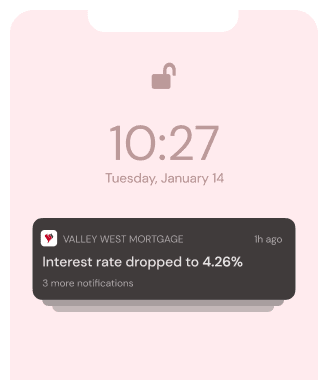
Anyone who may be looking to purchase a new home or refinance their current home should have a thorough education on certain aspects of the mortgage industry. No one wants to make an uninformed decision, especially when it comes to making such an important financial investment.
First thing’s first, let’s talk about the money. Remember back when you were a kid and you wanted that special brand of sugared cereal, the newest toy or game? If your mom was a savvy shopper she’d say “Wait until it goes on sale”. Because we’ve all heard of this phrase on so many occasions, we have all learned to live by it. We are attracted to the words sale, rebate and bargain. We’re also attracted by discounted prices. We love the idea of obtaining something that is valued at a higher price, but not having to give up an arm and a leg to get it.
So when you’re in the market for buying a home, as a buyer, you want to make the best financial decision possible. That would be buying a great house but not necessarily having to spend your life savings on it.
When you’re looking to purchase a home, you have to first seek out a loan (in most cases from a mortgage broker or bank). Once approved, the broker or bank will give you the loan amount to purchase the house. You then pay money back to the bank until your house is paid off.
The best time to purchase a home is when interest rates on mortgages are low. This is because, you are paying less money back on what you initially borrowed in order to purchase the home.
What do interest rates have to do with purchasing a home?
Interest rates affect your monthly payment, by determining how high or how low these payments will be. For example: The house you have your eyes on is $220,000.
You make a down payment of $20,000 (10%).
The remaining principal (the amount of the loan you will need for the house) is $200,000
Remember, upon paying back the loan, you must pay on the principal amount of the loan, as well as the interest on the loan every month
If your interest rate is 5.5%, you’d be paying about $1000 in interest every month, plus your house note and all of the other fees that come with owning a home
If your interest rate is at 4%, you’d be looking at paying a bit over $700 a month in interest
As you can see, a small increase or decrease in your interest rate can have a serious impact on your monthly payments. The lower the interest rate, the more affordable your monthly payments have the potential to be.
Am I Ready to Buy a House? The Five-Signal Readiness Checklist
Buy
Am I ready to buy a house? The five-signal readiness checklist
VWVSWritten by Valley West Editorial · Reviewed by Vatche Saatdjian, NMLS #69363 (Valley West Mortgage, NMLS #65506) · Expert-reviewed
Published October 20, 2014 · Updated July 24, 2026 · 6 min read
Valley West Mortgage is an independent mortgage lender, NMLS #65506, and is not affiliated with or endorsed by the Federal Housing Administration (FHA), HUD, the U.S. Department of Veterans Affairs, the U.S. Department of Agriculture, Fannie Mae, or Freddie Mac. This article is educational; every figure shown is an illustrative example - not a quote, offer, approval, or commitment to lend.
Quick answer: You are ready to buy a house when five things are true: your income is stable with a track record, an emergency fund survives the closing intact, the full monthly ownership cost fits your budget without wincing, your down payment plan is real (including any assistance programs), and you realistically expect to stay several years. Rates and seasons matter less than every one of those five - because they are the things a market can't fix for you.
Key takeaways
Readiness is a budget-and-stability question, not a market-timing question.
Keep reserves after closing - the down payment should not consume the emergency fund.
20% down is a myth as a requirement; monthly fit is the real test.
The practice payment is the cheapest proof: live on the ownership budget before you commit to it.
The five readiness signals
Am I ready? The honest checklist
Signal
What ready looks like
Income stability
A consistent track record underwriting can verify - typically two years of history
Reserves
An emergency fund that still exists the day after closing
Monthly fit
Full ownership cost - payment, taxes, insurance, HOA, upkeep - fits with room to breathe
Entry plan
Down payment + closing costs mapped, assistance and gift funds included
Horizon
A realistic intention to stay several years, so transaction costs can be absorbed
The monthly-fit test, done honestly
Price the whole cost of the homes you are actually browsing - principal, interest, taxes, insurance, HOA, and a maintenance reserve - and set it against your real monthly life, not an optimistic version of it. Then run the practice payment: for a few months, pay your rent plus the difference into savings. If it holds painlessly, you have proven the budget and fattened your reserves in one move. If it pinches, you have learned that at zero cost - the cheapest lesson in real estate. The deeper framework is in our rent-vs-buy guide.
The entry plan: smaller than the myth
The 20%-down legend stops more qualified buyers than any lender does. Conventional loans start at 3% down, FHA at 3.5%, VA and USDA at zero for eligible borrowers - and Nevada's assistance programs plus family gift funds can carry real weight at the closing table. What actually matters is that the plan is concrete: numbers on paper, sources documented, reserves intact afterward.
The entry plan gets easier the further your price range travels. That is a large part of why first purchases so often land on the valley’s north side, and why it is worth knowing where to start with a local lender near you before the search begins.
Honest signs you are not ready yet
Income too new to verify, a down payment that would zero the savings account, a budget that only works if nothing ever breaks, or a serious chance of relocating within two years - any of these is a wait-signal, and waiting on purpose is a strategy, not a failure. Use the runway: build the reserve, work the credit tune-up, run the practice payment, and arrive at the prequalification conversation with a file that says yes.
Example borrower scenario
A couple earns enough for the payment but the down payment would empty their savings to the last dollar. They wait nine months, run the practice payment, bank the difference, and qualify for assistance that covers half the entry cost - buying the same spring with reserves intact. Readiness was never about the paycheck; it was about the cushion. Illustrative only.
Want a professional read on your readiness?
A Las Vegas loan officer can run the five signals against your actual numbers in one conversation - and if the answer is 'not yet,' you'll leave with the exact runway plan. No obligation.
Five signals: stable income with a track record, an emergency fund that survives the closing, a monthly budget where the full ownership cost fits comfortably, a workable down payment plan including any assistance, and a realistic intention to stay several years.
How much money should I have left after closing?
Enough that an ordinary emergency does not become a mortgage crisis - many advisors suggest keeping several months of expenses in reserve after the down payment and closing costs, not spending every dollar to get the keys.
Do I need 20% down to be ready?
No. Conventional programs start at 3% down, FHA at 3.5%, VA and USDA at zero for eligible borrowers - and Nevada assistance programs can cover part of the entry cost. Readiness is about the monthly fit, not a 20% myth.
Should I pay off all debt before buying?
Not necessarily all - underwriting cares about your debt-to-income ratio, not a zero balance. Killing high-interest debt usually helps both the ratio and your life; drainig every account to be debt-free but reserve-less does not.
What is a practice payment?
For a few months, live as if you already own: pay your rent plus the difference to your projected full ownership cost into savings. If the budget holds painlessly, you have proven readiness and grown your reserves at the same time.
President, Valley West Mortgage · NMLS #69363 · Company NMLS #65506
Las Vegas mortgage expert since 2004 · Equal Housing Opportunity. Valley West Mortgage is an independent mortgage lender operating in 32+ states and DC, with offices at 8010 W Sahara Ave Ste 140, Las Vegas, NV. Find a loan officer →
'
+''
+'Valley West Mortgage'
+'
See what you qualify for
'
+'
Ten minutes with a Las Vegas loan officer: your programs, your payment, your real numbers. No obligation.
Valley West Mortgage · NMLS #65506 · Equal Housing Opportunity
';
o.addEventListener('click',function(ev){ if(ev.target===o||ev.target.className==='vw-bbp-close'){ o.remove(); } });
document.addEventListener('keydown',function esc(ev){ if(ev.key==='Escape'){ var x=document.querySelector('.vw-bbp-overlay'); if(x)x.remove(); document.removeEventListener('keydown',esc); } });
document.body.appendChild(o);
}
function fire(){
if(stopped())return; mark(); teardown();
loadBB(function(ok){
if(ok){
var called=false;
try{ BB.api.openModal('leadWorkflow'); called=true; }catch(e){}
if(called){
/* openModal can return silently with the modal never displayed on this origin; verify it is actually visible, else fall back */
var n=0,iv=setInterval(function(){
var f=document.querySelector('iframe[src*="global_modal"]');
if(f){ var cs=window.getComputedStyle(f); if(cs.display!=='none'&&f.offsetWidth>0){ clearInterval(iv); return; } }
if(++n>=8){ clearInterval(iv); fallback(); }
},250);
return;
}
}
fallback();
});
}
var timers=[];
function onExit(e){ if(e.clientY<=8&&!e.relatedTarget)fire(); }
function onScroll(){ var d=document.documentElement; var max=d.scrollHeight-window.innerHeight;
var y=window.scrollY||d.scrollTop||document.body.scrollTop||0;
if(max>0&&y/max>=0.6)fire(); }
function teardown(){ document.removeEventListener('mouseout',onExit); window.removeEventListener('scroll',onScroll); document.body.removeEventListener('scroll',onScroll); timers.forEach(clearTimeout); }
if(stopped())return;
document.addEventListener('mouseout',onExit);
window.addEventListener('scroll',onScroll,{passive:true});
document.body.addEventListener('scroll',onScroll,{passive:true});
timers.push(setTimeout(fire,45000));
})();