Quick answer: Before joining a mortgage company, press on seven areas: product breadth, processing support, lead and marketing support, technology, pricing transparency, licensing and compliance support, and how the shop settles a fight over a file. Ask every prospective employer the same questions. In Nevada one company sponsors your license at a time, so the answers shape your entire next year.
Recruiters open with the pitch. However, a licensed originator is really making an operations decision, not a listening decision. Joining a mortgage company means handing one employer your license sponsorship, your pipeline, and your referral reputation all at once. Therefore the useful move is to run the interview like an underwriter runs a file. Ask narrow questions. Insist on specific answers. The checklist below works on any shop in the Las Vegas valley, and it works on us too.
Key takeaways
- Joining a mortgage company in Nevada moves your entire license. NRS 645B.450 bars a licensed mortgage loan originator from being employed by or associated with more than one mortgage company at once. Therefore a move is a clean break rather than a trial run.
- Product breadth is an operations question, not a brochure question. Ask what happens to a real borrower who fails the first box you try. Moreover, ask who makes that call and how fast.
- Nevada already requires the supervision you should be asking about. NRS 645B.460 obligates a mortgage company to keep written policies and procedures plus a system to review transactions, communications, and documents. Ask to read them.
- Compensation structure is federal law, not shop philosophy. Regulation Z at 12 CFR 1026.36(d) prohibits paying an originator based on the terms of a transaction. Consequently, the honest question is how the plan is documented, not how big it sounds.
- Renewal is a calendar with a hard edge. A Nevada mortgage loan originator license expires every December 31, and the renewal window runs November 1 through December 31 with at least 8 hours of certified continuing education.
Why does the interview run in both directions?
Because the cost of a wrong move lands on you first. Joining a mortgage company hands one employer your sponsorship, your pipeline, and your referral reputation on the same day. Your borrowers follow you. Your referral partners watch how the next six files close. Meanwhile the shop absorbs one bad quarter and moves on.
One license, one company at a time
Nevada writes this into statute. Under NRS 645B.450, a person licensed as a mortgage loan originator may not be associated with or employed by more than one licensed or registered mortgage company at the same time. In other words, you cannot audition two shops in parallel. You commit, then you find out.
That single rule is why a checklist beats a gut read. You get one look at the answers before you are inside.
The paperwork behind joining a mortgage company
The mechanics are worth knowing, because they reveal how organized a shop really is. Nevada requires an applicant to hold employment or a written offer of employment from a mortgage company. Additionally, the company must supply a verified statement accepting responsibility for your activities as a mortgage loan originator.
Then comes sponsorship. Before you may act on the company's behalf, the company has to enter its sponsorship of you in the Nationwide Multistate Licensing System and Registry. Meanwhile your former employer must remove its sponsorship no later than the third business day after your termination date. Ask a prospective employer who files that sponsorship and how quickly. A vague answer here predicts a lot.
Seven areas, and the question that gets a real answer
| Area | Ask this | What a specific answer sounds like |
|---|---|---|
| Product breadth | What happens to a borrower who fails the first box we try? | A named second and third path, plus who decides |
| Processing | Who touches my file, by role, from application to funding? | Named roles, a ratio, and an escalation contact |
| Turn times | What actually drives your turn times up? | Specific bottlenecks, not an average |
| Leads and marketing | What is provided, what is shared, and what do I build? | A written split with examples from this month |
| Technology and pricing | Can I see the pricing screen and the loan origination system today? | A live screen share during the interview |
| Licensing and compliance | Who tracks my renewal and my continuing education? | A named person and a calendar |
| Culture and disputes | Walk me through the last file where sales and operations disagreed | A real story with an outcome |
What should you ask about product breadth before joining a mortgage company?
Every shop lists programs on a website. Consequently, that list tells you almost nothing about joining a mortgage company and actually working there. The real question is narrower and much harder to fake.
The question behind the question
Ask this instead: what happens to my borrower when the first box says no? That single question exposes the whole operation. A shop with one comfortable product will find a way to make your borrower fit it. In contrast, a shop with genuine breadth reaches for the next structure.
Federal law cares about this too. Regulation Z prohibits steering a consumer into a transaction because the originator earns more on it, unless the consummated transaction serves the consumer's interest. Therefore a narrow product menu is not just a business limitation. It is a compliance pressure point you inherit personally.
Ask what happens to the file, not what is on the rate sheet
Concretely, breadth means FHA, VA, and conventional financing sitting under one roof, plus investor products such as DSCR for business-purpose files. A borrower who fails conventional ratios may still land on FHA. A veteran who was steered toward conventional may do far better with VA entitlement. An investor buying a rental does not belong in an owner-occupied box at all. We took that argument apart file by file in a companion piece on what a four-program menu changes over a year of pipeline, which walks the same four borrowers from first decline to closed loan.
Ask to see how each program is actually supported day to day. At Valley West that support is public, which makes it checkable. You can read how FHA files get presented to Las Vegas buyers before you ever sit down with us. Similarly, ask any prospective employer to show you their own reference material rather than describe it.
A self-employed buyer walks in. She wants a primary residence in the northwest valley and she also owns one rental.
Box 1 — conventional: her two-year income average falls short on ratio. Declined as structured.
Box 2 — FHA: ratios work with the lower down payment, so the primary purchase survives.
Then box 3 — VA: her spouse is a veteran, which opens an entirely different entitlement path.
Box 4 — DSCR: the rental refinance qualifies on property cash flow instead of personal income.
One borrower produced two closings and a referral. At a single-product shop the same conversation ends after Box 1. This scenario is illustrative rather than a quote, approval, or commitment to lend, and DSCR financing is for business-purpose investment property rather than owner-occupied homes.
Who actually touches your file after you take the application?
Before joining a mortgage company, map the people who will actually carry your files. Ask for names by role. Do not accept the word "operations" as an answer. You want the org chart between your application and the funding wire.
Name the roles, not the department
Specifically, ask who orders the appraisal, who requests conditions, who talks to the title company, and who calls your borrower when something slips. Then ask how many files each of those people carries at once. Additionally, ask what happens when that person takes vacation.
Nevada actually gives you leverage here. NRS 645B.460 requires a mortgage company to exercise reasonable supervision and control over its loan originators. That includes written policies and procedures, a system to review transactions and communications and documents, and a system for reporting fraudulent activity to the Division. Ask to read the written policies during the interview. A shop that cannot produce them quickly has told you something important.
What turn times actually depend on
Averages are marketing. Instead, ask what pushes a file from routine to slow at that specific shop. Common honest answers include appraisal capacity, condition clearing, and investor overlays on a particular program.
Then ask the follow-up that matters most. When a file goes sideways, who has authority to fix it without a committee? Fast shops usually have a short answer. For a sense of what the review stage really involves, our guide to what underwriters actually check covers the ground your processing team lives in every day.
What lead and marketing support is provided, and what do you build yourself?
This is where interviews get fuzziest. Candidates joining a mortgage company often accept adjectives here. Instead, insist on categories.
Provided, shared, or self-funded
Ask for every marketing item to be sorted into one of three buckets. Provided means the company pays and delivers it. Shared means costs or leads split somehow. Self-funded means you pay, full stop.
Then ask for examples from the current month rather than last year. Moreover, ask how many originators share whatever lead flow exists. A generous-sounding source divided across a large floor is a different offer than it first appears.
Who owns the database when you leave
Few candidates ask this, and it matters enormously. Find out who owns the contact database, the past-client list, and the co-marketing pieces carrying your name. Similarly, ask who is responsible for consent and outreach compliance when the company markets on your behalf.
Ask one more practical question. If you build a referral base with real estate agents, does the company have a compliant framework for co-marketing? Partnership programs have real legal boundaries, and a shop that treats them casually creates exposure that eventually reaches you.
Want to run this checklist on us?
Bring the same seven questions to a conversation with Valley West. We will answer them in order, on the record, with no obligation and no pitch deck. Licensed loan officers only.
See loan officer careersHow transparent are the technology and the pricing?
Technology answers are easy to inflate. Consequently, the fix is simple: ask to see the screens during the interview, not after you sign.
Ask to see the screens
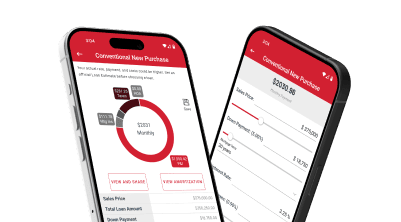
Request a live look at the loan origination system, the pricing engine, and whatever portal your borrowers will use. Then watch how many clicks a scenario takes. Additionally, ask whether you can price a file yourself or whether you must route every scenario through someone else.
Ask about lock policy in plain language too. Who locks, when, and what happens on an extension? Indeed, lock mechanics are one of the fastest ways to learn how a shop treats its originators under pressure. Our explainer on how a rate lock works is a useful shared vocabulary for that conversation.
Pricing questions worth asking before joining a mortgage company
Here is the part many candidates get wrong. Compensation structure is not a philosophy that varies by shop taste. Regulation Z prohibits paying a loan originator compensation based on a term of a transaction, or on the terms of multiple transactions. It also restricts an originator from being paid by both the consumer and another party on the same file.
Therefore the useful questions are structural rather than numeric. Is the plan in writing? Who explains it, and how often does it change? Does the shop document how it complies with the federal rules above? Finally, note that Regulation Z requires your name and NMLS ID on the credit application, the loan estimate and closing disclosure, the note, and the security instrument. Your identifier travels with every file you touch, so the shop's compliance habits become your public record.
What licensing and compliance support does Nevada actually require?
Nevada is specific about mortgage loan originator licensing. Therefore joining a mortgage company here comes with published checkpoints. As a result, you can test a prospective employer against a documented standard rather than a vibe. If your own license is still in progress, start with what NRS 645B asks of a first-time applicant.
Nevada licensing checkpoints when you change companies
| Checkpoint | Authority | What it means for your move |
|---|---|---|
| One employer at a time | NRS 645B.450(1) | You cannot be sponsored by two mortgage companies at once |
| Offer plus verified statement | NRS 645B.410 | The new company must accept responsibility for your activity in writing |
| Sponsorship entered in NMLS | NRS 645B.450(2) | Only the company can initiate it, and it must precede your first file |
| Old sponsorship removed | NRS 645B.450(3) | Your former employer has until the third business day after termination |
| Initial license education and testing | NRS 645B.0137, NAC 645B.363 | At least 30 hours of approved instruction plus the SAFE MLO test components |
| Surety bond coverage | Division of Mortgage Lending | You must be covered by the sponsoring company's bond |
| Annual renewal | NRS 645B.430 | Expires December 31; file November 1 through December 31 with 8 hours of continuing education |
Initial licensing, briefly
A first-time Nevada applicant completes at least 30 hours of approved instruction and passes both the national and state components of the SAFE mortgage loan originator test. The applicant also consents to a credit, criminal, and background investigation. If you are already licensed, most of this is behind you. Still, the details matter when a shop offers to help someone on your team get licensed.
Renewal is a calendar, not a favor
A Nevada mortgage loan originator license expires each year on December 31. Renewal must be filed on or after November 1 and on or before December 31, with proof of at least 8 hours of certified continuing education from the preceding 12 months. Miss it and the license is cancelled on December 31, though the Commissioner may reinstate it if you file by February 28 of the following year.
So ask directly. Who tracks your renewal date? Who pays for and schedules continuing education? Does anyone audit that the whole floor is current before November? These are small questions with large consequences. Ask one more while you are there, namely what happens when the property sits in another state.
How does a company handle a disagreement over a file?
Culture questions usually produce culture answers. However, joining a mortgage company means living inside its disagreements. So ask for a specific story and listen for structure.
Ask for the escalation path
Ask who you call when underwriting declines something you believe is approvable. Then ask who that person calls. A shop with a real path names two or three people quickly. Meanwhile a shop without one changes the subject.
Ask about exceptions as well. Who can grant one, on what basis, and how is the decision recorded? Notably, the answer tells you whether decisions are made by policy or by whoever is loudest that afternoon.
Ask about the last hard file
This is the single best question in the interview. Ask the manager to walk you through the most recent file where sales and operations disagreed, and how it ended. You are not testing the outcome. Rather, you are testing whether anyone remembers the details and whether the story includes a fix.
Finally, ask to speak with two originators who joined in the last year. Ask them what surprised them. Good shops arrange that call without hesitation.
Valley West takeWe wrote this checklist knowing it would be used on us, and that was the point. An originator who interrogates an operation before joining it is exactly the originator who protects a borrower six weeks into a difficult file. So we would rather answer seven hard questions now than manage a mismatch later. Two answers we give often: product breadth exists here because Las Vegas borrowers rarely arrive pre-sorted, and the escalation path is short because our floor is not enormous. Ask us the same things you would ask anyone else. Then ask the shop down the street. If our answers are not the most specific ones you hear, you have learned something useful either way.
Frequently asked questions
Can I work for two mortgage companies at the same time in Nevada?
No. NRS 645B.450 states that a licensed mortgage loan originator may not be associated with or employed by more than one licensed or registered mortgage company, or exempt person, at the same time. Therefore a move to a new shop is a full transition rather than a trial period.
How fast does my old company have to release my NMLS sponsorship?
Nevada requires the former mortgage company to remove its sponsorship from the Registry no later than the third business day following the date of termination. Sponsorship can only be initiated by a company, though it may be removed by either the company or the individual through NMLS.
What should I ask about product breadth?
Before joining a mortgage company, ask what happens to a borrower who fails the first program you try. A specific answer names the second and third paths and identifies who makes the call. Breadth generally means FHA, VA, and conventional financing under one roof, plus investor options such as DSCR for business-purpose files.
More questions about making the move
Is it appropriate to ask about compensation structure in an interview?
Yes, and the structural questions matter most. Regulation Z at 12 CFR 1026.36(d) prohibits compensating a loan originator based on the terms of a transaction. Ask whether the plan is in writing, who explains it, how often it changes, and how the company documents its compliance.
When does a Nevada mortgage loan originator license expire?
Every year on December 31. The renewal application must be submitted on or after November 1 and on or before December 31, along with proof of at least 8 hours of certified continuing education completed in the preceding 12 months. A cancelled license may be reinstated if the holder files by February 28 of the following year.
What supervision is a Nevada mortgage company required to provide?
NRS 645B.460 requires reasonable supervision and control, including written policies and procedures for loan originators, a system to review transactions, communications, and documents, and a system for reporting fraudulent activity to the Division of Mortgage Lending. Ask to read those written policies before you accept an offer.
The bottom line
A recruiting conversation is not a sales call you sit through. Joining a mortgage company is diligence you perform. Ask the seven questions, ask them of every shop, and grade the specificity rather than the enthusiasm.
Then weigh what you actually inherit. You inherit a product menu, a processing team, a technology stack, a compliance posture, and a way of resolving disagreements. Those five things determine how your next hundred files close. Meanwhile the pitch determines nothing at all.
If you are here as a borrower rather than a loan officer, you are in the wrong article, and we are happy to help anyway. Start with a fast quote instead.
Bring the checklist. We will answer in order.
Valley West Mortgage hires licensed loan officers in Las Vegas and beyond. Call (702) 696-9900 or read the careers hub first. Equal opportunity employer.
Explore loan officer careersSources
- Nevada Revised Statutes Chapter 645B — Mortgage Companies and Mortgage Loan Originators (NRS 645B.0137 initial licensing education and written examination; NRS 645B.410 qualifications, offer of employment, and the company's verified statement of responsibility; NRS 645B.430 annual December 31 expiration, November 1 to December 31 renewal window, at least 8 hours of certified continuing education, and reinstatement by February 28; NRS 645B.450 one company at a time, sponsorship entered with the Registry, and removal by the third business day after termination; NRS 645B.460 reasonable supervision and control, written policies and procedures, review systems, and fraud reporting): leg.state.nv.us
- Nevada Division of Mortgage Lending — Residential and Commercial Mortgage Loan Originators FAQ (initial licensure requires at least 30 hours of instruction in approved courses under NAC 645B.363, passing the national and state components of the SAFE MLO test, consent to a credit, criminal, and background investigation, and coverage by the sponsoring entity's surety bond; sponsorships are initiated only by a company): mld.nv.gov
- 12 CFR 1026.36 — Regulation Z, prohibited acts or practices and certain requirements for credit secured by a dwelling (paragraph (d) prohibits loan originator compensation based on a term of a transaction and restricts dual compensation; paragraph (e) prohibits steering; paragraph (f) sets loan originator qualification and licensing requirements under the SAFE Act; paragraph (g) requires the organization's and the individual originator's names and NMLSR IDs on the credit application, the disclosures required by 1026.19(e) and (f), the note, and the security instrument): ecfr.gov
- Consumer Financial Protection Bureau — Regulation Z, 12 CFR Part 1026, Section 1026.36 (agency presentation of the loan originator compensation, steering, qualification, and NMLSR identification rules): consumerfinance.gov
- Nevada Division of Mortgage Lending — Mortgage Companies and Mortgage Loan Originators under NRS 645B, industry information and licensing resources: mld.nv.gov
The wider Valley West platform
Across Valley West: The program platform an originator inherits here is public, so you can inspect it before any conversation. See a VA-focused resource built for Nevada veterans, an FHA reference desk for Las Vegas buyers, and a conventional financing hub for Clark County.
Keep reading
- QualifyWhat underwriters actually checkThe review stage your processing team lives in.
- QualifySelf-employed borrowers, explainedA classic file that needs a second box.
- BuyFHA versus conventionalThe comparison your borrowers ask for first.
- BuyHow preapproval really worksThe standard a good shop holds you to.
Last updated: July 20, 2026 — new CAREERS-cluster guide for licensed loan officers weighing joining a mortgage company in Las Vegas. Built on primary sources: NRS 645B.410, .430, .450, .460, and .0137 for Nevada mortgage loan originator licensing, sponsorship, supervision, and renewal; the Nevada Division of Mortgage Lending FAQ for the 30-hour education and SAFE test requirements; and 12 CFR 1026.36 for loan originator compensation, steering, qualification, and NMLS identification rules. Contains no compensation figures, no production promises, and no comparison to any named company.